
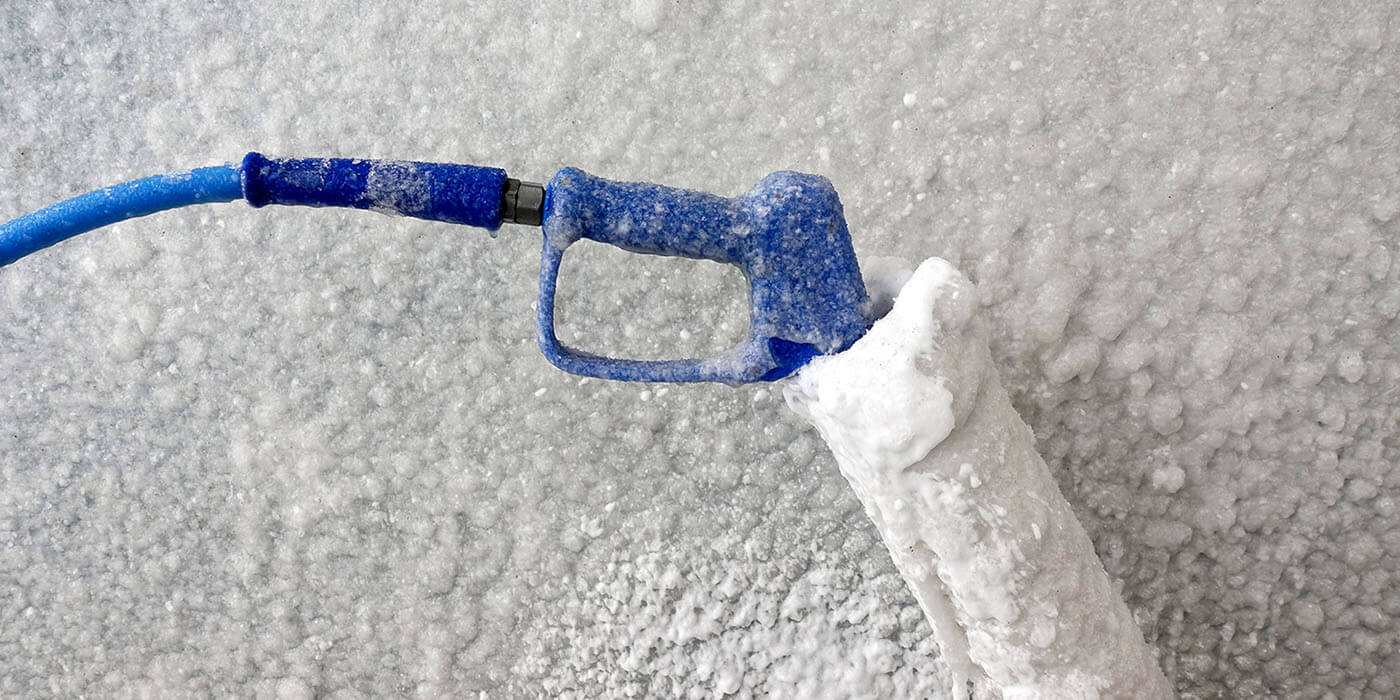
Unexpected Cold Snaps and Frozen Pressure Washers: What to Check and What Breaks
Posted by American Pressure Inc on 28th Jan 2026
Cold weather is nothing new for many pressure washing professionals, but unexpected cold snaps can still catch even experienced operators off guard. When temperatures drop suddenly, especially in regions that don’t normally see prolonged freezes pressure washers and steam equipment are at high risk for freeze damage.
If your pressure washer or Arctic Steamer was exposed to freezing temperatures, it’s critical to understand what may have been damaged, what to inspect once temperatures rise, and how to prevent the same issue in the future.
Did Your Pressure Washer Freeze?
Freeze damage doesn’t always announce itself immediately. In many cases, the machine may look fine until it’s restarted, at which point leaks or performance issues become obvious.
Water expands as it freezes. When that expansion happens inside pumps, coils, or hoses, components can crack internally even if no damage is visible from the outside.
If your pressure washer was stored with water in it during a cold snap, there is a strong chance freeze damage occurred.
What Happens When a Pressure Washer Freezes
When water freezes inside a pressure washer, pressure builds rapidly inside components that are not designed to expand. This often leads to structural failure once the ice thaws.
The most commonly affected components include the pump, heating coil on hot water machines, and hoses.
The Pump: Most Common Point of Failure
The pump is the component most frequently damaged by freezing. When ice forms inside the pump manifold, it expands and cracks internal passages or the pump head itself.
A clear sign of freeze damage is water pouring out of the pump housing once the unit is thawed and turned on. In most cases, a frozen pump cannot be repaired and must be replaced.
For this reason, pump inspection should be the first step after a cold snap.
Hot Water Machines: Coil Damage
On hot water pressure washers, the heating coil is another vulnerable area. If water is left in the coil during freezing temperatures, the expansion of ice can cause the coil to crack.
Coil damage may not be immediately obvious, but signs include:
-
Water leaking from the coil area
-
Loss of heat
-
Reduced system pressure
Coil replacement is a significant repair, making proper winterization and post-freeze inspection critical.
Hoses and Accessories
High-pressure hoses and supply hoses can also burst when frozen. Even if a hose looks intact, small internal cracks can lead to failures once pressure is applied.
After a freeze event, hoses should be carefully inspected for leaks, bulges, or soft spots before returning equipment to service.
Southern Cold Snaps: A Common Cause of Freeze Damage
Many freeze-related failures occur in southern or moderate climates when an unexpected cold snap hits. Operators may not be prepared for freezing temperatures and machines are often left outside, in trailers, or in unheated spaces.
Once temperatures rise, it’s important to check your pressure washer before putting it back into service, even if it was only exposed to freezing conditions briefly.
What to Do After a Freeze
Once temperatures are safely above freezing, equipment should be allowed to thaw completely before inspection.
At that point, operators should:
-
Inspect the pump for visible cracks or leaks
-
Check the coil area on hot water machines
-
Examine all hoses and fittings
-
Pressurize the system carefully while watching for leaks
If water immediately pours from the pump, replacement is likely required.
Ready Pumps: A Smarter Replacement Option
When a pump has been damaged by freezing, replacing it quickly and correctly is essential.
Ready pumps simplify replacement by arriving pre-assembled and properly configured, reducing downtime and installation errors.
American Pressure offers several ready pump options designed to get machines back up and running efficiently.
One option to consider is the RRV Ready Pump, which is designed for reliable performance and straightforward installation.
General Pump EZ4040G Ready Pump
Another popular replacement option is the General Pump EZ4040G Ready Pump. This pump is well-suited for freeze-damaged replacements and is available through American Pressure.
Our part number for this pump is P53-NS-EZ4040G-READY
Having ready pump options in stock allows operators to minimize downtime after freeze damage and get back to work faster.
Preventing Freeze Damage Going Forward
While unexpected weather can’t always be avoided, freeze damage is often preventable.
Best practices include fully winterizing machines, removing water from pumps, coils, and hoses, and storing equipment in heated spaces whenever possible. Even brief exposure to freezing temperatures can cause damage if water is left inside the system.
Unexpected cold snaps are one of the leading causes of pressure washer damage, especially in regions unaccustomed to freezing weather. Understanding what components are most vulnerable — and what to inspect after temperatures rise can save time, money, and frustration.
If you suspect freeze damage or need replacement components, American Pressure carries pumps, ready pump assemblies, hoses, and parts to help get your equipment back in service quickly.
Learn more about our equipment and parts at:
https://americanpressureinc.com/