
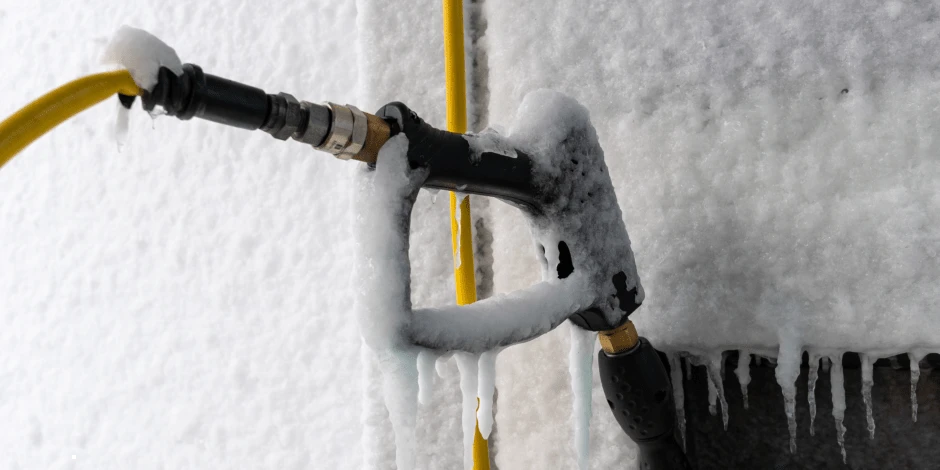
Winterizing Your Pressure Washer with Antifreeze
Posted by American Pressure Inc on 27th Oct 2026
We recommend ethylene glycol, the typical green automotive antifreeze, for winterizing your pressure washer. It’s reliable, testable, and reusable. A 50/50 mix (50% antifreeze, 50% water) or a concentrate (typically a 70/30 mix) is a good place to start. If you find 100% antifreeze, you’ll want to dilute it to that 70/30 level, since pure antifreeze will freeze at around 10°F.
The video above walks through the winterization procedure for the Arctic Steamer. It has a lot of good information, but the process may vary depending on your specific pressure washer. If your pressure washer has a float tank, the process will be very similar to what’s shown for the Arctic Steamer. A hot water pressure washer may need 3 to 5 gallons of antifreeze, or more, to get through the entire machine, coil, and hoses. For a cold water machine, 1 gallon is generally more than enough.
- Turn off the water supply and run the water in the float tank down as far as you can, or drain it completely.
- Add antifreeze to the float tank, and be ready to add more.
- Turn your pressure washer back on with your hoses and trigger gun hooked up, but make sure the nozzle is removed.
- Keep adding antifreeze to the float tank until you see the first hint of green coming out of the wand, then release the trigger.
- Create a closed loop by putting your wand into the float tank.
- Pull and hold the trigger to recirculate for a couple of minutes, then release it. This ensures an even blend of antifreeze throughout the system.
- Pull and release the trigger 2 to 3 times to make sure the antifreeze has made it through the unloader and bypass hose.
- Use your antifreeze tester (insert link here) to check the strength of your antifreeze and see what temperature your machine is protected to. If it’s too weak, add a stronger mixture to the float tank, recirculate for a few minutes, and retest.
- Once you’re at a safe level for where you’ll be storing your pressure washer, you can pack it up for storage. You can blow the antifreeze out of the hoses and wand if you prefer, but we recommend leaving it in the pump, since antifreeze contains good lubricants.
- The next time you’re ready to use your pressure washer, have a bucket ready to collect the antifreeze so you can reuse it next season.
No Float Tank? Use an Antifreeze Bucket
If your pressure washer doesn’t have a float tank, we sell an antifreeze bucket setup that connects to the inlet garden hose connection, has a ball valve, and acts as the float tank in the directions above. Before you start, make sure your machine was just run with water. This keeps the pump primed so it draws antifreeze from the bucket more easily. Then follow the same steps as above, and when you’re ready to unhook the antifreeze bucket, make sure to close the ball valve.
Where to Store It
Your machine can be stored anywhere, indoors or outdoors, as long as the antifreeze is strong enough for the temperatures it will see.
Gas Engine Machines
If you have a gas engine pressure washer, it’s a good idea to add some fuel stabilizer, shut off the fuel, and run the remaining gas out of the carburetor. You can do this after you’ve recirculated the antifreeze and tested its strength. Just keep the closed loop going and recirculate until the engine runs out of gas and shuts off.
Let Us Handle It
If you’d rather not winterize your pressure washer yourself, we can do it for you, at your place or ours. Give us a call at 763-521-4442 with any questions.